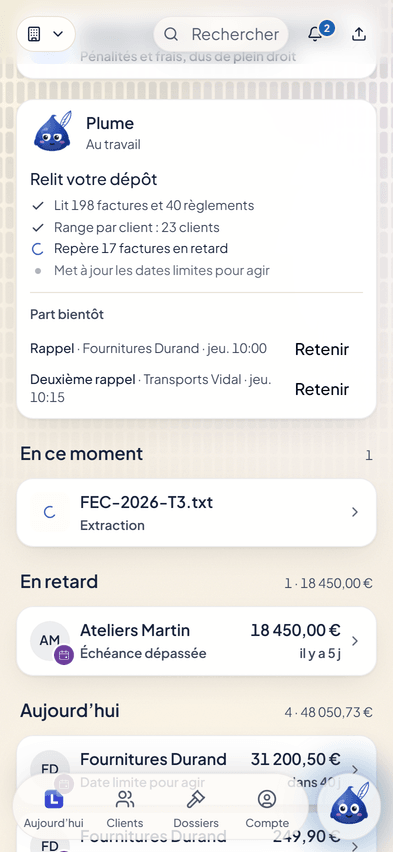
Reminders in your nameReminders and the formal letter go out in your name, and each one can be held back beforehand.
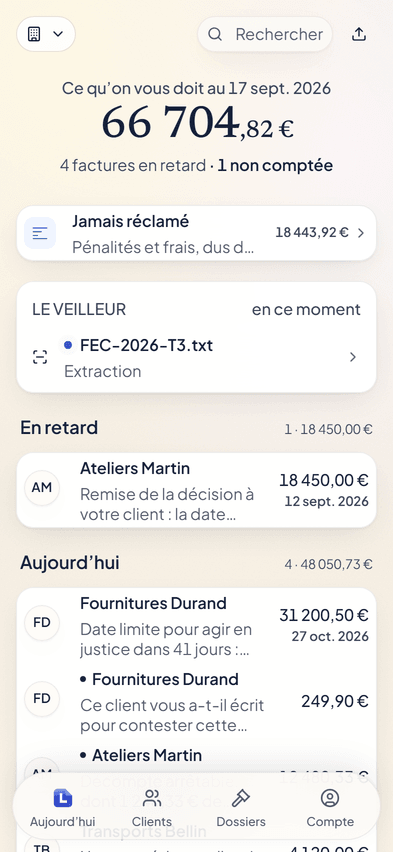
Penalties to the centThe penalties and costs due on each invoice, detailed period by period.
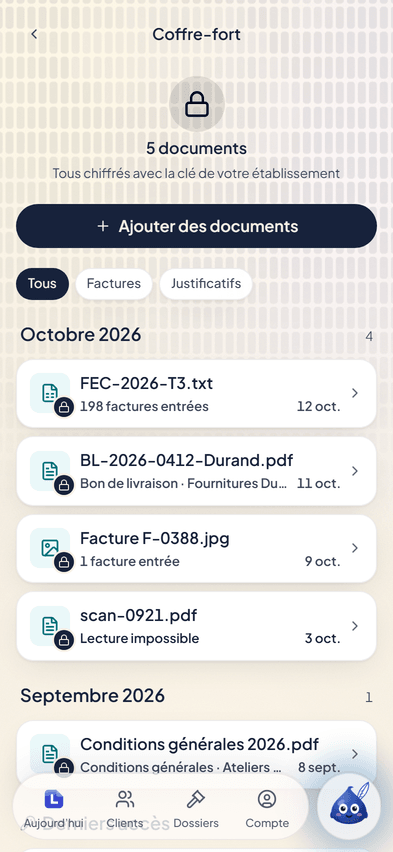
The vaultEvery document is sealed on arrival, and every opening is logged.
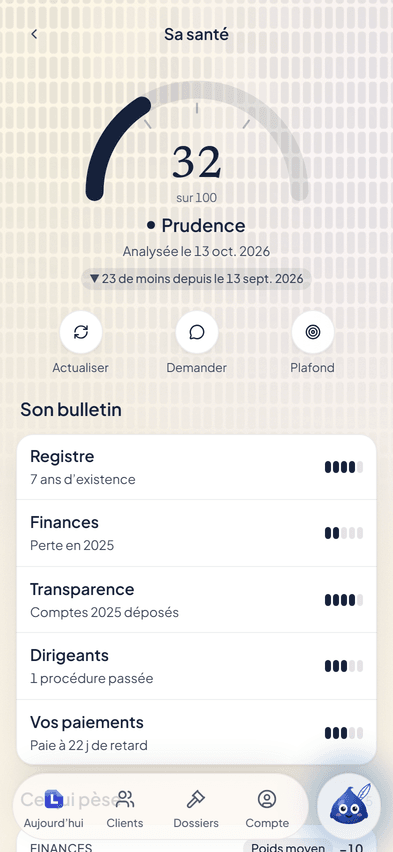
The health of your clientsA score out of one hundred, and each of the facts that move it, at its source.
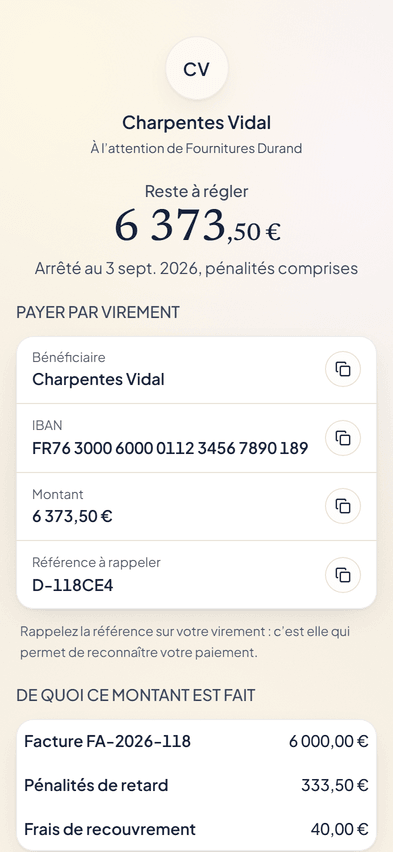
The payment pageYour client pays by bank transfer, into your account, from a page in your name.
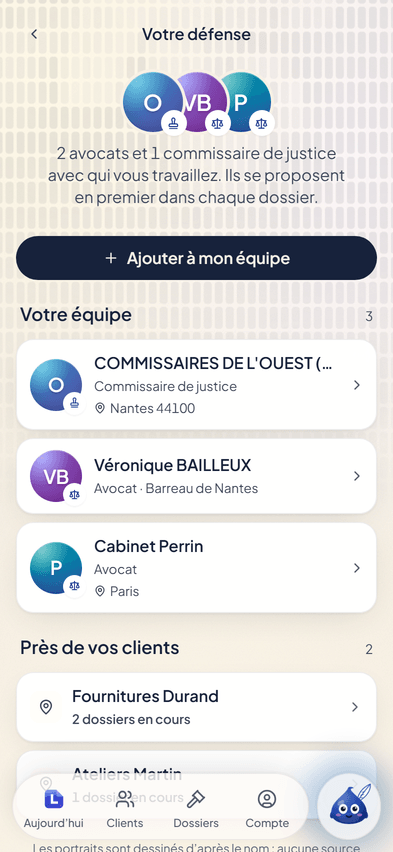
Your defenceThe lawyers and bailiffs (commissaires de justice) practising near your client, their contact details, and the case file ready to hand over to them.
Upload an export or connect your software: you see what you are owed within minutes. 30-day trial, €0 today, no commitment.
You have completed the package of work you were given, the main contractor has been paid by its client, and you are still waiting for your money. Either it no longer answers, or it has just entered court-supervised reorganisation. In construction, this situation has a specific remedy that many subcontractors do not know about: the French law of 31 December 1975 allows them to claim payment directly from the project owner, meaning the end client.
Direct action: what the law says
The text is short: "the subcontractor has a direct action against the project owner if the main contractor does not pay, one month after having been served formal notice, the sums due under the subcontract; a copy of this formal notice is sent to the project owner" (article 12 de la loi n° 75-1334 du 31 décembre 1975 relative à la sous-traitance).
In practice, the process has three stages.
1
A formal letter to the main contractorThe day you decide
You ask it to pay the sums due under the subcontract. This is what the law calls a formal
notice (mise en demeure).
2
A copy to the project ownerAt the same time
A copy of this letter is sent to the project owner. It is this copy that fixes the limit of
what the project owner may owe you, so it is better that it receives it early.
3
The waiting period, then the request to the project owner1 mois later
If the main contractor has not paid within this period, you can ask the project owner for
payment.
This is not a court procedure: it consists of letters. What happens if the project owner then refuses to pay is a separate question, and a lawyer is the right person to ask.
A limit to know about: what it still owes
The project owner does not pay twice. Its obligations "are limited to what it still owes the main contractor on the date it receives the copy of the formal notice" (article 13 de la loi n° 75-1334 du 31 décembre 1975 relative à la sous-traitance).
This is why speed matters. Take the example of a plasterboard installer, subcontracted by a general contractor on an office project, who is owed €24,000. If the project owner receives the copy while it still owes the general contractor €60,000, the limit is not a problem. If it receives the copy after paying the final balance of the project, it no longer owes anything to the general contractor, and therefore nothing to the installer.
In addition, the action can only cover the services provided for in the subcontract and from which the project owner "actually benefits".
One condition: having been accepted
Direct action requires that the subcontractor has been presented to the project owner. The law requires the main contractor to "have each subcontractor accepted, and the payment terms of each subcontract approved, by the project owner" (article 3 de la loi n° 75-1334 du 31 décembre 1975 relative à la sous-traitance).
A subcontractor that nobody has presented to the end client is in a weaker position. Hence the value, at the start of a project, of checking that this acceptance has indeed taken place, and of keeping a record of it.
Even if the main contractor is in difficulty
The law states it expressly: direct action "remains available even if the main contractor is in compulsory liquidation, court-supervised settlement or temporary suspension of proceedings". The wording dates from 1975, but the principle still stands: the main contractor's insolvency proceedings do not extinguish this right.
And a clause in the subcontract by which you waived it would have no effect: "any waiver of direct action is deemed unwritten".
Before it comes to that
Direct action is a resource, not a reflex: it brings the end client into the picture, and the relationship with the main contractor is affected. The decision is yours. What helps is knowing where your invoices stand: how much is due, since when, and what penalties apply.
What Letikette does
Letikette tracks your subcontracting invoices like any others: it calculates what is owed, late-payment penalties and fees included, and prepares your letters in your name. If you have a lawyer, the case is passed to them, and they decide what happens next.
This article presents general rules. It does not constitute legal advice: the decision to act, and how to do so, remain yours.